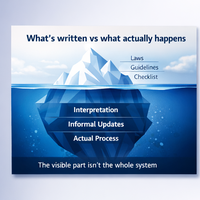
It’s all in English. The meeting is conducted in English. The emails are in English. The proposal...
Imagine this. You’ve just finished a meeting with a local partner or service provider. You walk away thinking:
- “That went well.”
- “They agreed.”
- “We’re aligned on next steps.”
A week later, nothing has happened. No progress. No update. No deliverables. When you follow up, the response is polite, positive… and still doesn’t move things forward. What happened?
Most foreign founders assume: “They said yes, so we’re good.”
In Indonesia, that’s not always how communication works. And if you don’t adjust for that, you don’t just get confusion - you get delays, misalignment, and avoidable risk.
That’s why choosing the right Professional isn’t just about technical skill. It’s about having someone who can bridge cultural context in real time.
In many countries, communication is explicit
In places like Australia, communication is generally:
- direct,
- explicit, and
- task-focused.
If someone says:
- “Yes” → it usually means agreement
- “No” → it usually means no
- “There’s a problem” → you hear about it quickly
This creates a system where:
what is said = what is meant
So foreign business owners develop a simple operating assumption:
“If something is important, people will say it clearly.”
In Indonesia, communication is often contextual
Indonesia operates differently.
Communication is influenced by:
- respect
- hierarchy
- relationship
- desire to avoid conflict
That creates a very different dynamic:
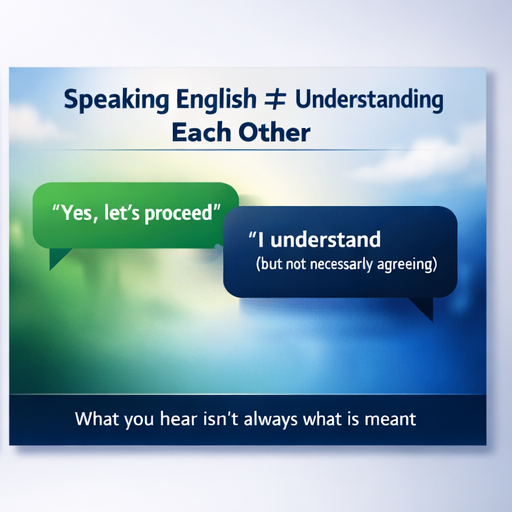
- “Yes” can mean “I hear you”, not “I agree”
- “We’ll try” can mean “this may not be possible”
- Silence can mean uncertainty, disagreement, or waiting
- Hesitation can signal risk that hasn’t been verbalised
This isn’t about poor communication.
It’s about protecting relationships and avoiding unnecessary friction.
But for foreign founders, it introduces a real problem:
The message you hear is not always the message being sent.
Where this goes wrong in practice
These differences show up quickly in day-to-day business:
1) Meetings feel aligned, but execution stalls
You leave thinking decisions were made.
The other side leaves thinking discussion is still ongoing.
2) Issues surface late
Concerns may not be raised immediately - especially if they create tension.
By the time the issue becomes visible, the timeline is already impacted.
3) Deliverables don’t match expectations
Both sides think they agreed on scope.
But the understanding of:
- priority
- timing
- level of detail
…may differ significantly.
The real cost of cultural misalignment
This isn’t just a “soft” issue.
It has very real business consequences:
- Delays → because issues aren’t surfaced early
- Rework → because expectations were misaligned
- Relationship strain → because frustration builds quietly
- Loss of confidence → because outcomes feel unpredictable
Like regulatory friction, this rarely shows up as one big failure.
It shows up as:
small misunderstandings that compound over time.
What a good Professional actually does (beyond technical work)
This is where the right Professional becomes a multiplier.
Not just because they know the rules.
But because they understand how things are communicated - and how to clarify meaning early.
A strong Professional doesn’t just deliver work.
They actively translate context.
1) They interpret what’s really being said
They pick up on signals like:
- hesitation
- indirect language
- changes in tone
- gaps between words and intent
And they address it early - before it becomes a problem.
2) They ask the questions others won’t ask
A good Professional will calmly surface issues like:
- “Just to confirm, are we aligned on timeline?”
- “Is there any constraint on your side we should be aware of?”
- “What’s the risk if we proceed this way?”
Not aggressively - but clearly.
3) They create clarity where ambiguity exists
Instead of relying on verbal alignment, they:
- summarise discussions in writing
- confirm next steps
- define deliverables
- clarify assumptions
This converts implicit understanding into explicit agreement.
4) They manage expectations on both sides
This is critical.
A good Professional doesn’t just “represent you” to a counterparty.
They also:
- help you adjust expectations
- explain how things are likely to play out locally
- guide you on timing, tone, and approach
They act as a two-way translator.
Common hiring mistakes foreign founders make
Cultural gaps amplify some common mistakes when hiring Professional services in Indonesia.
Mistake 1: assuming “good English = clear communication”
Language ability ≠ alignment.
Someone can speak excellent English and still:
- communicate indirectly
- avoid conflict
- leave key assumptions unstated
Mistake 2: over-relying on verbal agreement
If it’s not documented, it’s not aligned.
Always confirm:
- scope
- timeline
- responsibilities
- deliverables
Mistake 3: interpreting politeness as certainty
Positive tone does not always mean:
- agreement
- readiness
- feasibility
A simple checklist for choosing the right Professional
If you’re hiring in Indonesia, test for cultural clarity - not just technical competence.
Ask:
- Do they summarise meetings clearly?
- Do they proactively flag risks or constraints?
- Do they ask clarifying questions?
- Do they translate vague input into structured plans?
- Do they follow up with written confirmation?
If the answer is “no” to most of these, expect misalignment.
Where Pasar Jasa fits
Cultural ambiguity becomes much less risky when the engagement itself is structured.
Pasar Jasa is designed to reduce these gaps by:
- requiring clear scope and deliverables
- tying work to defined milestones
- creating documented communication trails
- linking reviews to actual completed work
This doesn’t remove cultural differences.
But it reduces the space where misunderstanding can occur.
Closing thought: clarity is a competitive advantage
Foreign businesses succeed in Indonesia when they combine:
- speed
- respect for context
- and clarity of execution
The right Professional helps you do all three.
Because success here isn’t just about what you say.
It’s about what’s understood.
Want to reduce risk when engaging Professional services in Indonesia? Explore verified Professionals on Pasar Jasa and work with people who combine technical expertise with real on-the-ground understanding.
Check out our guide to hiring a Professional here.